The rationing of health
provisions is something that garners considerable controversy, so I felt it would be worthwhile to go into it in more detail.
As you’ll know, the NHS is a
publicly funded health provider, with finite resources to treat and care for
patients. However, if the very best interventions were used for every patient,
the NHS would need many times the funding it currently receives. As a result, something
has to give, and certain drugs, procedures and care elements must be withheld
to stay within budget. The billion-pound question is how the service should be
rationed – what should be provided, and to whom.
Intuitively we might be lead to a
simple cost to benefit ratio system. Each treatment could have the years of
life, or better still years of life adjusted for quality, compared with its
cost. This could give a simple value of the cost per year of healthy life.
However, it cannot be so simple, in part because the use of one treatment may
in time lead to far more expensive care for an illness in later life, such as
dementia. A doctor I shadowed during the Summer actually suggested that, if the
NHS wanted to save money, they should encourage people to smoke so that people
died from acute rather than chronic diseases.
Ignoring the indirect effects for
now, here’s an example: A Primary Care Trust (or soon to be Clinical
Commissioning Group) has a portion of its funding left to spend, and has two
options. It can provide statins to all those with moderately raised cholesterol
levels thus reducing the risk of vascular or cardiac diseases slightly for each
individual, or artificial dialysis for all those in renal failure, which is
clearly saving lives directly.Both cost
the same, but spending the money on providing statins has a cost per healthy
year of, say, £10,000, whereas the figure for dialysis is £20,000. This
situation is simplistic and ignores the side effects of both, and the figures
are made up but not far from reality. In this context ‘Statins’ could be replaced
with any risk-reducing, preventative or early diagnostic measure, and
‘dialysis’ with any direct intervention with a greater cost to benefit ratio.
If we were only to use a simple ratio
we would consign those in renal failure to certain death in order that a much
larger number of people will have only a slightly reduced risk of disease
because the net benefit is greater if we provide statins. However, this seems
intuitively wrong to us, and the potential recipients of the statins would
likely prefer that the money be spent on providing dialysis rather than giving
them an insignificant reduction in personal risk.
This is known as the ‘rule of
rescue’, that we see ourselves as having an ethical prerogative to save an
identifiable person, even if the resources put into it would be better used on
what could be termed ‘statistical’ people. The term comes from the enormous
resources that are often put into finding a missing person, or rescuing one in
danger. You may have noticed that, to quite an extent, this is how the NHS
functions, with things like intensive care units, expensive ‘last-ditch’ cancer
drugs, and arguably many surgical procedures. In other words, prioritising care
to people who require it immediately at the expense of people who could have
their risk of disease reduced. The fact remains that those ‘statistics’ are
still people in need of healthcare, and that their eventual illness and death
is just as real as the individual’s. The rule also acts the other way -
patients believe, rightly or wrongly, that they are entitled to certain
treatments. This can be very difficult for doctors if the expected treatment is
not within guidelines.
The ethical dilemma of a cost to
benefit ratio is deepened when we consider groups such as the users of tobacco,
the overweight, the elderly and other at-risk groups. It seems reasonable that the
future prospect of life, which is often limited for, say, the elderly, should
also be factored into healthcare rationing decisions. The practical implication
of this would be that that the prior-mentioned groups may have certain
treatments withheld on the grounds that they will get less benefit than a
young, healthy person would. This runs against our intuitions about the need
for equality in healthcare provision, and again for providing care to those who
need it immediately.
In an ideal world we should want
to help all groups of people, be they identifiable individuals or ‘statistics’,
and be they young or old, but we often aren’t able to do so. In these
times of economic trouble, perhaps we have an imperative to move from the ‘rule
of rescue’ to a more holistic provision of healthcare which has greater
emphasis on prevention and early diagnosis, lest the service run into such financial
difficulties that it cannot adequately provide either. By the way, this is not a manifesto to stop dialysis or shut
down ICUs, but simply something to get people thinking about how healthcare is
rationed, and whether some parts of the NHS may have become too bloated at the
expense of simpler preventative intervention.
So, do you agree with my
tentative conclusion? Do we base too much of our health policy on the rule of
rescue at the expense of healthcare? Where should we draw the line between expenditure
on public health and on treatment?
Space exploration is often seen as
an excess of Humanity, funded at the expense of more important needs. Surely
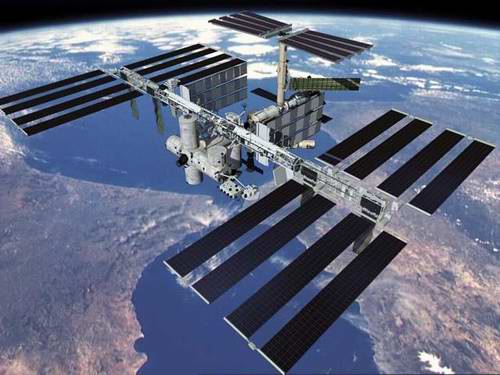
the 150 billion dollars spent on the International Space Station would have
been better used combating poverty, or cancer, or climate change? However,
people often don’t look beyond the immediate and the conspicuous elements of
space travel, and thus ignore the important effects that space exploration has
on civilisation.
For a long time space exploration
has perched on the edge of technological know-how. Many people are familiar
with the fact that the Moon landing was achieved with less than the computing
power of a pocket calculator. The list of technologies that were either
developed or improved through the space programme is enormous. A cursory glance
at Wikipedia’s ‘NASA spin-off technologies’ page will show you an imposing list
of such technologies, including light-emitting diodes (LEDs), radically
improved solar energy and structural analysis software. Whilst even these important
technologies pale in the face of the many billions that were poured into the
Space Race, they cannot be ignored when looking at the value of that funding.
Space exploration is not just about landing people on
other planets; it is about putting satellites into orbit, sending unmanned
probes to distant reaches of the solar system, and learning more about the
Universe we inhabit. The benefits that satellites have brought us are
immediately clear – information networks, weather forecasting, monitoring
farming, atmospheric studies and so on. An understanding of climate change, a
phenomenon that could prove to be the greatest threat humanity has ever faced,
would have been immensely more difficult had we not made such concerted efforts
to leave the planet. Our ability to communicate would also have been greatly
diminished without satellites that can send signals to the other side of the
Earth in a fraction of a second.
Sending unmanned probes has
improved our knowledge of other planets and other-worldly bodies, and by
extension has augmented our understanding of our own planet. By looking at how
the climates of planets like Mars and Venus have changed we gain insight on the
mechanisms that affect our own. Space-based telescopes have allowed us to peer
into the depths of space, showing us a previously hidden Universe that has lent
help to our knowledge of physics. Even today space exploration is trying to
answer the most important questions that we can ask: Are we alone? Why is there
something instead of nothing? What does out future hold? In this respect, space
exploration is a necessity for us to satisfy our species’ endless search for
knowledge and new frontiers.
Our tentative first steps into
space have also had a cultural effect. The heavily publicised major events of
space exploration have likely inspired a generation of engineers, scientists
and technologists. It was an affirmation of the exciting ideal that anything
humanity can imagine, it can achieve; to paraphrase Kennedy, ‘We choose to go
to the moon not because it is easy, but because it is hard’. Undoubtedly the
earlier stages of the journey into space may have had an even greater effect if
it was in the spirit of co-operation, as it is increasingly nowadays, but the
direct and indirect effects of the events that captured the entire world’s
imagination cannot be understated.
Our decision to beginning, and continue, our forage
into space will be crucial to Humanity’s long-term survival. The impact by a large
asteroid (or similar apocalyptic event such as nuclear war) is not a matter of
if, but when. We will be very glad when that we started when we did, when that
time comes. If we had dismissed space exploration as an unnecessary luxury, we
would have literally putting all our eggs in one basket. It only needs one
rouge comet (or nation!) to put an end to virtually all human life on Earth,
and at least now we stand a fighting chance at being able to do something about
it.
Some of the effects of space travel
are not easily tangible. Arguably pictures from space, such as Earthrise (right)
or the Hubble Ultra Deep Field (see elsewhere) have given many people a new
world-view. To see our small oasis in an endless sea of unforgiving space
underlines our need to protect it, and maintain a sense of perspective. In the
words of Carl Sagan:
“Look again at that dot. That's
here. That's home. That's us. On it everyone you love, everyone you know,
everyone you ever heard of, every human being who ever was, lived out their
lives. The aggregate of our joy and suffering, thousands of confident
religions, ideologies, and economic doctrines, every hunter and forager, every
hero and coward, every creator and destroyer of civilization, every king and
peasant, every young couple in love, every mother and father, hopeful child,
inventor and explorer, every teacher of morals, every corrupt politician, every
"superstar," every "supreme leader," every saint and sinner
in the history of our species lived there--on a mote of dust suspended in a
sunbeam.”
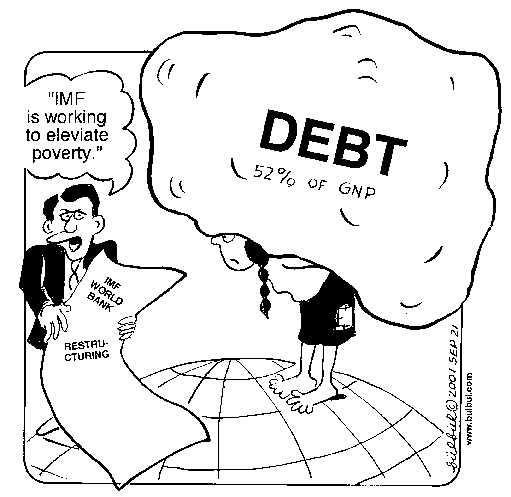
The IMF was founded in 1944 with the purpose of assisting the
economies of its member’s countries, reduce poverty and secure financial
stability. However, it has caused greater exploitation of the developing world by
the Northern hemisphere for corporate gain, undermined democracy and increased
poverty and inequality.
The IMF acts as part of the spearheading of the capitalist
ideology of Neoliberalism across the world by the USA; an ideology that
advocates the protection of financial institutions at any and all costs,
reducing state involvement in regulation of corporations, and expanding the
role of the private sector in the public sector. This allows the business
elites of the capitalist upper class to accumulate vast wealth at the expense
of the majority of the people through exploitative, immoral, high-risk and
environmentally damaging practices for short-term profit, whilst under the
protection and blessing of subservient governments. When the consequences of
such practices do cause economic disaster, the people of those countries pay
the price through austerity to subsidise the government bailing-out of
financial institutions. Essentially, the people suffer the socialising of the
losses, from cutting of welfare, job
loss in the public sector and under-funding or removal of public services such
as healthcare or education. Countries who have adopted this ideology have
ended-up with a widened rich-poor gap, environmental destruction, inefficient
or useless transport, infrastructure and healthcare services. This is due to
private owners putting profit before people, in addition to weakened democracy,
increased corruption and unaccountability, as governments become accountable to
corporate interests and the IMF, as well as unable to make important decisions
to help their people.
The IMF makes loans to poor nations for development providing
they adopt Structural Adjustment Policies, or SAP’s, with the pre-text of
guaranteeing the loans are paid back and re-structuring to ensure economic
stability. However, this includes introducing the neo-liberal doctrine to that nation,
allowing the countries of the Northern hemisphere to enforce trade conditions
favourable to themselves, and to “liberalise” and focus their markets on
resource extraction, as well as exports to provide a plentiful flow of cheap commodities
to the Northern hemisphere. When the developing countries export their
resources and commodities they do gain some revenue, but when they import the
processed goods made from their exports, they will lose it, as the products are
more expensive as they have required additional labour. Countries that also
produce commodities to export as well extracting resources will gain revenue to
pay off their debts, and keep their currency stable. However, as result of the
large number of other countries forced into the global markets, a price war
scenario is created, which pushes prices down, and hence the value of exports
of the poor countries is reduced. Many will be given a focus on a single or few
resources and/or commodities, and the saturation of the markets with the
products also pushes down the prices. This leads to a further fall in revenue
from, making it even more favourable to buyers in developed countries. An
example of such saturation is that around fifty of these developing countries
depend on exporting three or fewer commodities to generate over half their
revenue from exports, and twenty are dependent on exporting commodities for 90
percent of all revenue from foreign exchanges. The lack of revenue generated
from exports leaves the countries unable to import processed commodities, or
food to feed their population, or to fund development programs. Also, the focus
on production of cash crops can lead to starvation, as land needed for growing
food is used to grow crops purely for export, such as coffee, sugar, cotton
etc. rather than to feed people.
The adjustments made result in countries having to increase
exports of their raw resources and/or commodities in order to be able to pay
off their debts. The large number of other poor nations that have entered or
been forced into the global markets with a focus on the export of raw resources
and commodities, results in a price war which forces these countries to lower
their prices, which is favourable to the richer countries as they make large
savings when they import. The reduced prices of raw resources and commodities
then forces the poor countries to increase exports to pay off their debts and
keep their currency stable, which is expensive, and so are forced into
austerity in order to pay off their debts, which keeps the countries in poverty
or increases poverty. This reduces the value of labour, and hence workers’
wages, often generating social unrest, with protests and riots against the IMF
taking place in these countries. The flow of capital from investors into these
countries becomes more unstable over time, but they are easily able to pull out
if they become concerned about their interests and assets, and this can results
in a major economic collapse. An example is the Asian Crisis in 1997, when
Western corporations withdrew from many countries in Asia, which sent millions
into poverty, increased debt, devaluated currencies and created major decreases
in GDPs in the affected countries. The resultant unrest in Indonesia resulted
in a regime change when the President was forced to step down.
The lack of revenue from exports makes paying off debt very
difficult, or even impossible. This can become useful for the developed
countries who import goods from the developing countries, as they can keep them
in a state where they can get access to their exports on the terms that are
most beneficial to themselves. This is brought about by the price wars and competition
between the developing countries, and so can force them to accept their terms,
or lose all trade, and hence income, with which to pay off their debts. The
lack of revenue means that the developing countries cannot import advanced
technologies for development, or fund programs, such as improving
infrastructure, education or housing.
Below is a description of these SAP’s, and the negative
effects they can have.
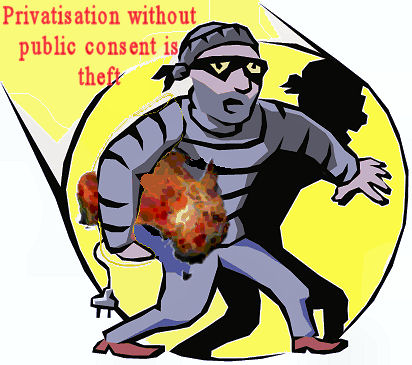
Privatisation
Sate-owned services, assets or industries are sold off at low
prices to the corporate elites of the country, or to corporations based in the
Northern hemisphere, which results in the government losing revenue and
national output from its formally owned industries (e.g. Russia’s national
output fell by 50% when it privatised its utilities), and public services being
inefficiently run as they become focused on the accumulation of private profit.
This includes the hideous situation of the American healthcare system, which
generates enormous profits whilst being inefficiently run, and leaving many
patients who struggle to pay their bills in poverty, or letting those who
cannot pay suffer and die. Privatisation has severe consequences for the
population, as vital services such as water, healthcare and education etc.
become financially crippling or impossible to use, causing more suffering and
deaths in the population, and leaving them without education, healthcare,
sanitation, utilities and water. This leaves many unable to work due to illness,
or unable to get better jobs from a lack of education or skills, leaving them
in poverty. In Africa, efforts to deal with the HIV/AIDS crisis are being
undermined by a privatised healthcare system, as effective delivery of
treatments are made unavailable to many, creating greater inequality as
healthcare become an exclusive commodity for the rich, rather than a necessity and a right.
Austerity
The IMF emphasises the balancing of budgets in the form of
austerity, by removing subsidies and cutting social programs, even when they
are desperately under-funded, and despite the important role that they have in
bringing development and reducing poverty. Cutting of these programs can have
negative long-term effects on economic growth. For example, cutting healthcare allows
AIDS to devastate workforces, or Tuberculosis to infect those living in poor
living conditions. If people have to cut back on spending due to job loss, demand
in an economy falls, and businesses suffer reduced revenue from fewer sales and
have to lay off members of its workforce. The government cannot collect as much
tax from business and its redundant workforce, and so is forced to cut more of
its social programs to save money, resulting in a vicious cycle of deeper austerity
leading to more poverty. At the same time, the country may be ordered to lower
taxes for the rich elites with no benefit to anybody but the rich, and raising
taxes on the poor, with no benefit to anybody at all, other than make the
country look more attractive to foreign investors. The social provisions that
are cut are the same that helped the industrialised nations of the world
develop as they are now, and kept them stable, yet are still cut, with highly
damaging results for development.
Deregulation
Deregulation is when a government reduces its role in the
private sector by a reduction or removal of regulations, and allowing greater
economic freedoms. The consequences of
such deregulation lead to lax state intervention in reducing carbon emissions
and pollution, increases in corporate power greatly influencing governments
through bribes and/or lobbying and the erosion of long term conditions for
production (such as by global warming from high carbon dioxide emissions causing
floods, droughts and crop failures). In addition it subverts labour rights, and
can lead to major financial crises as the state no longer intervenes in
preventing high-risk financial practices, such as credit default swaps or
high-interest debts and/or mortgages that can never be paid back.
Currency
Devaluation
The IMF may force some countries to devalue its currency
against the dollar and remove price controls, particularly for countries that produce
and export cash crops, or have plentiful natural resources. Devaluation makes
domestic goods and raw resources cheaper to buy for Northern countries, and aggravates
inflation for the poorer nations. The effects of simultaneous devaluation and
removal of price control can raise prices of products three or four times,
putting so many people into poverty that social unrest and riots become a
frequent occurrence.
Conclusion
Consider this:
“According to
UNICEF, over 500,000 children under the age of five died each year in Africa
and Latin America in the late 1980s as a direct result of the debt crisis and
its management under the International Monetary Fund’s structural adjustment
programs. These programs required the abolition of price supports on essential
food-stuffs, steep reductions in spending on health, education, and other
social services, and increases in taxes. The debt crisis has never been
resolved for much of sub-Saharan Africa. Extrapolating from the UNICEF data,as many as 5,000,000 children and vulnerable adults may have lost
their lives in the continent as a result of the debt crunch.” Ross P. Buckley
A real step forward in economic equality would be for the
neo-liberal doctrine to be thrown out completely (and ultimately capitalism,
which is discussed in another article by Daniel), as it only serves to
massively enrich the few at the expense of the many. I have listed some
alternative policies that developing countries could employ instead of the SAPs
enforced by the IMF.
Governments of developing countries should keep markets out
of their public services and infrastructure, to ensure that they are run to
benefit the people, not corporations. They should be run effectively and
efficiently to keep the population healthy, educated and literate without them
being forced to pay extortionate amounts to stop avoid and poverty, and prevent
divisions forming in the population, creating a more stable and equitable society. Austerity
measures should also be ended, as they only serve to slow or reverse
development, reducing the revenue a government can make from tax to use for
development and public services. Debt cancellation will also be very helpful,
as it keeps developing countries from being exploited by unfair trade
agreements, and allowing them to use their revenue for development. Currency
devaluation to the dollar should be ended, and price controls kept in place to
ensure that inflation does not rise, so people can more easily afford food and necessities.
Regulations should be kept in place, particularly on large corporations and
financial institutions, so that they do not exploit workers, cause long-term
growth prospects to be damaged or made impossible by pollution, or utilise
high-risk and/or exploitative financial practices which can cripple the economy.
We live in a world that, at times, can seem cruel and broken, especially with news services than naturally focuses on the negative. Yet, every day there are untold stories of heroism, selflessness and progress that few will ever hear of, and countless more hidden in the mists of time. Rising above all these are a group of major events that everyone knows of - humanity's greatest achievements. From the Moon Landings to the Human Genome Project, these are some things so important that their effects go far beyond the event itself. In no particular order, and likely with many that should justifiably be on this list, I'm going to look at what I believe are humanity's best bits (with an obvious science/technology slant).
Space Exploration
The clichéd ultimate achievement is the Moon landing; undoubtedly reflecting the pinnacle of perseverance and technical know-how, it is only one of many milestones on our species' journey beyond our home planet. The first man-made object to be put into Earth orbit, the first man in space, the first landing of probe on Mars, and very recently the crossing of Voyager 1 into interstellar space are all accomplishments comparable to the manned landing in 1969.
Space exploration is the highest expression of humanity's innate drive to explore. Arguably, our adaptability to new environments and desire to spread across the planet, is one of the key elements of our psyche that makes us so unique and successful. From the first exodus from Africa, to the colonisation of the Americas, human history is filled with expansionary tendencies. Having explored all but the deepest recesses of our planet's surface, the move to space seems like the natural next step.
Some say that space exploration is a waste of resources, but I disagree. Aside from the enormous benefits of satellites that measure our planet's climate, allow us to communicate near-instantaneously from opposite sides of the world, and to peer to the very edge of the universe, space technology has had many offshoots that are inextricably woven into the fabric of human life.
In time, we will be glad that we began the move into space when we did. Our planet is threatened by countless events, both internal and foreign. Should an asteroid on a collision course with Earth be discovered tomorrow, and forecast to hit within 10 years, we would be more than hard-pressed to put up any resistance at all had we not yet bothered to begin our journey into space. The coming of such an asteroid is only a matter of time, and when it comes we should be prepared thanks to the leaps we have already made. Similarly, should a different apocalyptic event arise sometime in the next century or so, it is highly likely that we will have established some sort of permanent settlement on other bodies in our solar system, and that should civilisation on Earth be destroyed, humanity will continue.
While space missions are usually done under the name of a particular country, they are usually supported by an enormous team of people from all over the world, making space exploration a profoundly international endeavour. Although nationalism was heavily intertwined with exploration during the 'space race', more recently it is often considered as more of a collaborative enterprise, epitomised by the most expensive man-made object ever to exist, the International Space Station. The view of our planet from space has ignited a new view of the world, with perspective shifting from a national to planetary level, as summarised by astronaut Donald Williams: "For those who have seen the Earth from space, and for the hundreds and
perhaps thousands more who will, the experience most certainly changes
your perspective. The things that we share in our world are far more
valuable than those which divide us." This can only accelerate as journeying to space becomes more commonplace, and eventually available to not only astronauts the mega-rich.
Eradication of Smallpox
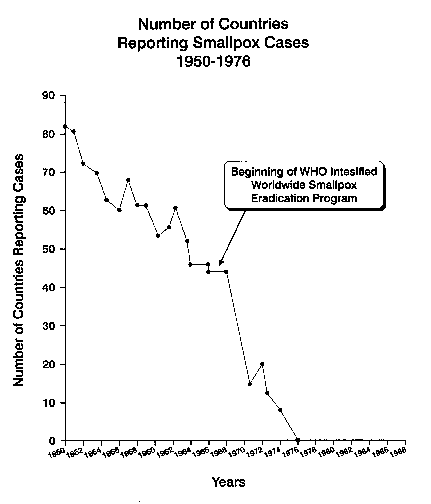
Over the 20th century, Smallpox killed between 300 and 500 million people - several times more than the total killed by both World Wars combined. Since the early 19th century, humanity has made efforts to wipe this scourge, which leaves many who survive it disfigured, from existence. Only in 1959, following a recommendation from the USSR's deputy health of health, was a concerted effort made to complete the job, eradicating what remained of it mostly in developing countries. In 1977 the last person was naturally infected, and two years later Smallpox was declared extinct, apart from a few strains remaining in storage possessed by the USA and USSR.
The eradication of Smallpox gave new hope to the similar extermination of diseases, including Polio and Malaria. For once we managed to wipe out a species that we actually wanted rid of (as opposed to the many hundreds, and possibly thousands that have become extinct due to our destruction of the natural environment) and saved many millions of lives as a result. Interestingly, the eradication Smallpox passed with little celebration - surprising for an event of such importance.
The Internet
The internet has come to dominate all spheres of civilization, from education and business, to social networking and journalism. The culmination of developments in communicative technology over the past century, it provided a place at which most human knowledge can be stored and accessed, and a hub for all types of media and art. It's true potential is only just being realised, and is likely to continue to increase in its effect on society and use in all walks of life.
The rise of the internet has lead to the creation of new dynamics, including instant messaging, social networking, memes (the funny pictures, and not the unit of cultural evolution), blogging (as you can see!) and so on. Arguably, our lives have been enriched more by the internet than by any other technological development, with the obvious exception of medical advancements. The achievement that is the internet is clearly not its creation alone, but also its populating with billion upon billion of web pages by many millions of people from every country in the world.
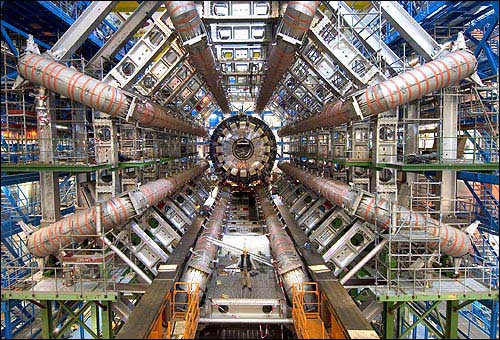
The Large Hadron Collider (and other awesome machines)
I'm lumping in machines like the first nuclear reactor (despite it's use in the first nuclear weapons), International Thermonuclear Experimental Reactor (ITER), National Ignition Facility (NIF) and various other particle smashers. The benefits of nuclear reactors are clear, providing clean (or at least somewhat cleaner than fossil fuels) energy with very little material, and the potential benefits of fusion reactors are even greater.
Many people object to the pure research that machines such as the LHC are involved in, on the grounds that it is costs an enormous amount ($4 billion) for no tangible benefit. This isn't necessarily true, as the construction of operating of the LHC has created and maintained jobs, and may have unexpected implications in the future. Without pure research there would be no applied research, and therefore no technology, so it is unreasonable to object to pure research. It is also difficult to establish whether a particular pure research project could produce anything directly beneficial in time, so the best course seems to me continuing pure research, if not only to satisfy human curiosity.
Note also that the cost of the LHC is less than what the world spends on it's militaries PER DAY - if there's a drain of resources that people should be complaining about, that is it!
These great machines are important not only for their use, but also for what they represent: the pinnacle of engineering and technical knowledge. Each is comprised of many millions of parts, precision engineered and fitted together to produce something that carries out something incredible, be it splitting atoms or smashing them together. They truly are testaments to our ingenuity and curiosity.
Artificial Intelligence
Obviously (at the time of writing) this isn't something that has been created yet, and is not likely to very many years. This would be, in my opinion, the single greatest development that humanity could make, both past and future. The creation of a true AI would be revolutionary directly in neurology, and indirectly in everything from philosophy to gaming. As I've suggested earlier, AI could spark an unprecedented shift in technology, and society as a whole.
Interestingly, now that I've got to the end of the list (remember that this is not exhaustive) I noticed they tie in chronologically:
Space exploration: 1957 (Sputnik) onwards
Smallpox eradication: 1979
The internet: 1982
LHC: 2008
Arificial intelligence: 20?? (being a techno-optimist)
What does it mean?
You may have noticed a theme running through this article - that all of these achievements were international in scope. The point I would like to make is that far greater progress can be made through co-operation than competition, and that to tackle the great problems of our time necessitates greater collaboration and unity. Be proud of what our species has accomplished, and look forward to what it will achieve in the future!
It's time for my third (of six) introductory pieces, and this time it's politics (do try to contain your excitement). I'm going to explain why I see capitalism, in it's current manifestation, as undesirable and unsustainable, whether capitalism can be modified into a more appropriate form, and a brief look at the alternatives.
What's wrong with Capitalism?
You will (or should!) already know what capitalism is, but in case you and your family have been living under a rock for the last couple of hundred years or you just need your memory jogging, click the link and take a look. In this part of the post I'm referring to the current corporate-capitalist system that prevails throughout most of the world. To give you a heads up, my criticisms of capitalism are split into three key sections - inequality and poverty perpetuated by capitalism, the instability and unsustainability of capitalism, and finally what I see as the immorality of capitalism.
Inequality - The Enemy of Peace, Happiness and Fullfillment
"In a world where 1 % of the population owns 40% of the planet's
wealth, where 34,000 children die every single day from
poverty and preventable diseases, and where 50% of the world's
population lives on less than 2 and a half dollars a day, one thing is clear...
Something is very wrong." - Peter Joseph
Like it or not, capitalism is based around inequality. More than that, it thrives on it, and perhaps even requires it to function properly. The foundation of capitalism is private ownership, the pursuit of profit and the accumulation of capital, which inevitably leads to those who have, and those who have not. From the few billionaires to the billions who scrape a living on a few dollars a day, capitalism, especially in its current form, is responsible for the deepest economic inequalities in the history of humanity, and these inequalities only continue to widen.
Not only is this level of inequality an abhorrent affront against human decency, it is linked to a whole host of social ills, from social alienation to the level of happiness, and from the number of teenage pregnancies to the suicide rate. Economic inequality tends to augment racial, religious, national and social inequalities.
Inequality is also the prime motivator in the desire for material accumulation at all levels of society, not because it will make us any happier, more fulfilled or healthier (although people often like to think it will), but simply because the enormous inequality and economic philosophy makes people feel that they must try to rise further up the ladder of wealth. Perhaps this is a natural impulse based on 'human nature', twisted by the context of modern society, but is likely to not be as I'll be discussing later (ooo... the anticipation!)
Equality should be one of the highest priorities of all governments, as promoting equality will certainly lead to a more stable, peaceful and productive society. This transition from institutionalised inequality to equality is not possible within the framework of our current economic system based on capitalism.
Poverty - Capitalism's Ultimate Crime
"The world has enough for everyone's need, but not for everyone's greed" - Gandhi
Poverty is, of course, tied closely to inequality. Those who exist in a state of poverty are those who live towards the bottom of the long scale of economic prosperity. Many reason are proposed for poverty, from the failure of the country's government to the 'laziness' of those who live in poverty, but when the issue is looked at closely in the context of our globalised world, only one reason emerges - the unequal allocation of resources, with a disproportionate amount going to primarily northern, 'developed', countries. This arises as a result of a capitalist system monopolised by the north.
Like for inequality, capitalism can thrive off poverty. It is useful firstly as a supply of cheap 'slave' labour, with those in abject poverty forced through their financial circumstances into dangerous, poorly paid and often brutally enforced manufacturing and agricultural jobs. It also serves as a warning to citizens of wealthier countries of the dangers of not fully embracing capitalist ideals (oh, the irony!), thus leading to poorly thought out arguments like 'capitalism is good because we have a high standard of living'. These arguments usually completely ignore the billions around the world who support that comparatively high standard of living, and the level to which resources are diverted to these countries, and away from the so called 'developing' nations.
Poverty, just like equality, can not be eliminated in a corporate-capitalist system, since a large number of people living in relative poverty is virtually a perquisite of the functioning of such a system.
Instability - The Death Throes of Capitalism? With the complex system of investment banks, stock markets and other such institutions with no tangible benefit to the vast majority of the world's people, the dominant economic system of the modern age has shown itself again and again to be highly, and increasingly, unsustainable.
Entire financial crises and recessions have been caused, not because there has been an decrease in the quantity of resources available, a decrease in the workforce size or some destructive event (such as a war or natural disaster), but simply because the risk-based system of investment, stock trading and a myriad of other such elements of the financial world has had a major screw-up. A major cause of the current economic downturn beginning in 2008 was such screw-ups, including the phantom 'derivatives market', which in 2009 stood at over $600 trillion (yes, trillion!) in value.
Although this element of instability is not a requisite of corporate capitalism, it currently plays and integral part in the current capitalist paradigm, and is likely to add further instability in the coming years if left unchecked. One thing that can be noted is that (with the exception of the Great Depression) economic crises and collapses have become more and more common over the decades, and increasingly severe, perhaps implying that capitalism is in its final death throes, and may soon make its final spectacular collapse. There is a second main reason for economic instability, which bring me nicely on to the unsustainability of capitalism.
Unsustainability - Infinite Growth faces a Finite World
"Oil depletion and climate change will create an entirely new context in
which political struggles will be played out. Within that context, it
is not just freedom, democracy, and equality that are at stake, but the
survival of billions of humans and of whole ecosystems." - Richard Heinberg
This is, I think, the most important of the arguments against capitalism, at least in its current form, as it shows how this system could potentially lead to societal and environmental collapse that threaten the continuation of civilisation itself. Accordingly, I'm going to spend quite a bit of time on it.
One important element of the consumerist-capitalist system is that it is based off an infinite growth model - that economic growth can continue indefinitely, and that the available resources will continue to increase with demand forever. However, we live on a finite world of finite resources, and so this sort of system can not continue to function for much longer under this premise.
By far the most important of these finite resources is crude oil. Oil is the lifeblood of modern civilisation. It is an incredibly dense energy supply that can be easily transported and used in a wide variety of machines. Without oil human societies would not have been able to grow in the same way they have and continue to, or reach the extraordinary levels of energy usage and societal complexity that we have today. But as everyone knows, oil will run out, but more importantly its production will reach a peak, after which the quantity of oil available per year decreases year on year.
This is known as the peak oil crisis, and there is strong evidence to suggest that it was a major factor in the economic downturn beginning in 2008. Immediately before the market crash, oil prices reached dizzying new heights that had never been experienced before. It looks likely that world oil production in around 2006, which would fit up perfectly with the subsequent rise in oil's price as the demand began to exceed the supply. As oil is required for most of the functioning of modern societies, from transport to agriculture, and from manufacture to electricity production, the astonishing increase in the price of oil helped to cause a major economic contraction. This contraction allowed the price of oil to plummet, thus allowing the now depleted supplies to build up again.
The world economy has begun to pick-up somewhat, and so demand for oil has increased accordingly. However, the initial problem still remains - that the peak in oil production has been reached, and therefore is not able to support much economic recovery at all before the supply again becomes severely restricted. If you look at the price of oil you will see that it remains at around $100 or over. Even a decade ago few people indeed would suggest that oil would ever reach that sort of price, but yet it has, and the high prices are seriously stunting any attempts at recovery. It is highly likely that a recession, or potentially a depression, could be triggered in the next couple of years as demand for oil again far exceeds the diminishing supply. This crisis may begin to be compounded by a peak in natural gas, and eventually in coal, in the next few decades.
Even if we were to ignore the affront to morality that is capitalism-caused inequality and poverty, capitalism can not survive in anything like its current form for more than a couple of decades, and the longer we hold on it to it and languish in its failure, the messier the transition to a new system will be.
Capitalism's Suicidal Tendencies
More than this, capitalism's continuing and increasing appetite for fossil fuels presents an existential threat to humanity. You will know (and should accept) that the burning of fossil fuels is releasing enormous quantities of greenhouse gases, primarily carbon dioxide, and that these are causing global temperatures to rise in most areas in a process known as global warming.
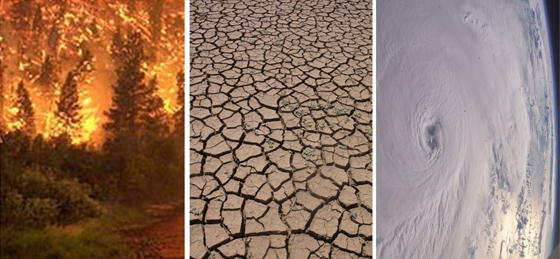
A temperature rise of even a couple of degrees from current temperatures (likely to occur within a few decades at our current level of fossil fuel consumption) would devastate food production, lead to increased extreme weather, and flood low lying areas. Current predictions for the likely increase in temperature by the end of the century range from 3 to over 10 degrees. When you consider that an increase of only 6 degrees (and possibly less if feedback events such as the release of underground methane caused by increased temperatures are included) would spell the end of most life on earth. Most ecosystems would utterly collapse, food production would become impossible in almost all regions of the world, and humanity would be pushed to the brink of extinction.
Even if you don't care about the immense suffering caused as result of inequalities, poverty and an inherently unstable economic system, you can see that not even you can escape the annihilatory environmental effects that will arise from the continuation of our current system!
Immorality - The 'Human Nature' Fallacy
"Moral certainty is always a sign of cultural inferiority.
The more uncivilised the man, the surer he is that he knows precisely
what is right and what is wrong. All human progress, even in morals,
has been the work of men who have doubted the current moral values, not
of men who have whooped them up and tried to enforce them. The truly
civilised man is always sceptical and tolerant, in this field as in all
others. His culture is based on 'I am not too sure.'" - H. L. Mencken
The argument that is probably brought up the most often in the debate of the merits of capitalism is the issue of 'human nature' - that capitalism is the natural outcome of primal human impulses of survival, which includes the accumulation of material goods and the brutal competition with other human beings. Therefore capitalism is the final evolution of human societies, and any other system is impossible because we are intrinsically greedy, exploitative and self-serving.
But this perspective is not based on reality. The earliest human societies (small family and tribal groups) were probably more collaborative than any society since then - they had to be! To survive, prosper and pass on their genetic code they had no choice but to work together in close knit groups, generally with each member taking a roughly equal share. Of course it is a natural human impulse to survive, but it is not natural to do this at the expense of fellow human beings. If it was, humanity would have been unlikely to have survived for very long before people's inability to co-operate lead to them all getting eaten as they slept alone, or the majority not having enough food if one member of the group was hoarding it. In fact, the survival/self-serving instinct is best served through co-operation - you will do far better with a hundred people working with you than by working against a hundred people!
If, in the unlikely situation that the mostly baseless assumptions made by proponents of capitalism about the human condition turn out to be true, what is that to hold us back to our roots? Every major religion for thousands of years has been based on a philosophy that is almost diametrically opposed to that of capitalism; a philosophy of altruism, co-operation and spiritual wealth, compared to the capitalist philosophy of exploitation, competition and material wealth. The vast majority people recognise that greed, selfishness and materialism are negative traits to have, even though many of those people do not act on it. As a species we see that capitalism is morally reprehensible, but we continue to hold on to it. Perhaps it's time we let go.
Ultimately capitalism, specifically its prominent consumerist element, cheapens the human condition and the human experience. Consumerism, through advertisements, media and other sources, tells us that we need 'things' to be happy, so we base our lives on the pursuit of these things. Even though advances in technology have given us the ability to partially or fully automate many tasks, thus decreasing the number of hours that we need to work, people now work longer hours than at any time before, just so they can purchase more things. This is, of course, self-defeating. Material possessions rarely give us long-lasting happiness and satisfaction, even though they may appear to for a time, and by increasing the length for which they work, people are given less time to spend with their friends and families, developing as a person and exploring interests - the things that will really make us happy and fulfilled in our lives.
Can Capitalism be Saved? From all these arguments we can see that capitalism in its corporate-consumerist state can not continue, and should not continue, if we want civilisation to continue in a stable and morally acceptable way (unless you can convince me otherwise in the comments section). Our current system has shown itself to be inefficient, unstable, destructive, unsustainable and morally repugnant, but can capitalism be modified to a more appropriate form? What, if anything, can we learn from the philosophy of capitalism?
What is Right in Capitalism?
There are a small number of elements to capitalism that are probably necessary in a new system. One of these is the importance of hard work, although preferably not for self-gain, but instead for self-fulfilment and helping others. The importance of personal freedom in capitalist philosophy is certainly necessary in a future system that can be considered moral. Aside from these two things, there is precious little that we should take from capitalism in its current form.
Modifying Capitalism Could capitalism be adjusted to a more stable, equal and sustainable form? The pillars of capitalism - profit, private ownership and the accumulation of capital - would suggest no, since these go against the desirable elements that an improved model of capitalism should have. Trying to accommodate these into capitalism would likely have to mean the twisting of its key tenants, rendering it vastly different to its roots - perhaps so different that it is no longer capitalism.
Capitalism is based on negative traits that people may harbour, and relies on the suppression of positive elements of the human psyche, such as compassion, altruism and a desire to work together. If we are to develop a system that fosters these positive traits, I can see no way that it can be achieved using capitalism as a framework.
We can try to patch up the box that is capitalism all we like, but still it will continue to leak its wealth, spelling untold human misery and suffering. The box threatens to burst entirely, destroying all of civilisation in the process. It is about time that we stopped trying to repair the box, and begin constructing a new one, that is strong, well filled and able to respond to changing times, before it is too late.
Towards the Future
"Where there is no vision, there is no hope." - George Washington Carver
What are we to replace the corporate-capitalist system with? Socialism, communism and sometimes fascism are often portrayed as the only alternatives to capitalism, but extraordinary times call for extraordinary thinking, beyond those which has remained mostly static for decades. We live in a world balanced precariously between despair and hope; between self-destruction and revitalisation. The forces of science and technology continue to advance inexorably, presenting new opportunities that would not have been possible even a few decades ago.
Visions of the Future
"The economics of the future is somewhat different. You see, money
doesn’t exist in the 24th century. The acquisition of wealth is no
longer the driving force in our lives. We work to better ourselves and
the rest of humanity." - Captain Jean-Luc Picard
I implore you to, as I have done, envision the future that you want. Spend time reflecting on your life philosophy, the current state of the world and your own experiences, and try to find what you would like the world to look like in a decade, fifty years, a century, or more from now.
I'd like to think that things like no more war or poverty are a given in your vision, but develop your views more, and always be critical of the conclusions you come to, and of course critical of others' conclusions.
In your future, what is it that drives people? What are the priorities of society? What is the role of government, if there should be one at all? What should the economic, political, social, cultural and spiritual apparatuses present to ensure the best quality of life for the highest number of people?
I'll look more at what my vision is in future posts, but it is certainly impossible to come to the conclusion that capitalism, in any form remotely like the current one with the obscenities of widening inequalities, deepening poverty, increasing instability and potential annihilation that goes along with it, will meet the criteria that a fully thought-out vision should, and I challenge you to prove me wrong!
 As you’ll know, the NHS is a
publicly funded health provider, with finite resources to treat and care for
patients. However, if the very best interventions were used for every patient,
the NHS would need many times the funding it currently receives. As a result, something
has to give, and certain drugs, procedures and care elements must be withheld
to stay within budget. The billion-pound question is how the service should be
rationed – what should be provided, and to whom.
As you’ll know, the NHS is a
publicly funded health provider, with finite resources to treat and care for
patients. However, if the very best interventions were used for every patient,
the NHS would need many times the funding it currently receives. As a result, something
has to give, and certain drugs, procedures and care elements must be withheld
to stay within budget. The billion-pound question is how the service should be
rationed – what should be provided, and to whom. This is known as the ‘rule of
rescue’, that we see ourselves as having an ethical prerogative to save an
identifiable person, even if the resources put into it would be better used on
what could be termed ‘statistical’ people. The term comes from the enormous
resources that are often put into finding a missing person, or rescuing one in
danger. You may have noticed that, to quite an extent, this is how the NHS
functions, with things like intensive care units, expensive ‘last-ditch’ cancer
drugs, and arguably many surgical procedures. In other words, prioritising care
to people who require it immediately at the expense of people who could have
their risk of disease reduced. The fact remains that those ‘statistics’ are
still people in need of healthcare, and that their eventual illness and death
is just as real as the individual’s. The rule also acts the other way -
patients believe, rightly or wrongly, that they are entitled to certain
treatments. This can be very difficult for doctors if the expected treatment is
not within guidelines.
This is known as the ‘rule of
rescue’, that we see ourselves as having an ethical prerogative to save an
identifiable person, even if the resources put into it would be better used on
what could be termed ‘statistical’ people. The term comes from the enormous
resources that are often put into finding a missing person, or rescuing one in
danger. You may have noticed that, to quite an extent, this is how the NHS
functions, with things like intensive care units, expensive ‘last-ditch’ cancer
drugs, and arguably many surgical procedures. In other words, prioritising care
to people who require it immediately at the expense of people who could have
their risk of disease reduced. The fact remains that those ‘statistics’ are
still people in need of healthcare, and that their eventual illness and death
is just as real as the individual’s. The rule also acts the other way -
patients believe, rightly or wrongly, that they are entitled to certain
treatments. This can be very difficult for doctors if the expected treatment is
not within guidelines. In an ideal world we should want
to help all groups of people, be they identifiable individuals or ‘statistics’,
and be they young or old, but we often aren’t able to do so. In these
times of economic trouble, perhaps we have an imperative to move from the ‘rule
of rescue’ to a more holistic provision of healthcare which has greater
emphasis on prevention and early diagnosis, lest the service run into such financial
difficulties that it cannot adequately provide either. By the way, this is not a manifesto to stop dialysis or shut
down ICUs, but simply something to get people thinking about how healthcare is
rationed, and whether some parts of the NHS may have become too bloated at the
expense of simpler preventative intervention.
In an ideal world we should want
to help all groups of people, be they identifiable individuals or ‘statistics’,
and be they young or old, but we often aren’t able to do so. In these
times of economic trouble, perhaps we have an imperative to move from the ‘rule
of rescue’ to a more holistic provision of healthcare which has greater
emphasis on prevention and early diagnosis, lest the service run into such financial
difficulties that it cannot adequately provide either. By the way, this is not a manifesto to stop dialysis or shut
down ICUs, but simply something to get people thinking about how healthcare is
rationed, and whether some parts of the NHS may have become too bloated at the
expense of simpler preventative intervention.